How to Authenticate a Vintage Leather Jacket
Label eras, stitching tells, hardware stamps, and the fakes to watch for on Schott, Avirex, and military-issue pieces.
This guide contains affiliate links. If you buy through one, we may earn a small commission at no extra cost to you — see our disclosure. It doesn't change what we recommend.
Start with the label — it dates the jacket before anything else does
Most established makers changed their label design every decade or two, which makes the label your fastest dating tool if you know the sequence:
- Schott — early labels (pre-1970s) are woven, not printed, with serif typography and often "Schott Bros." or "Perfecto" branding without the modern block logo. Later labels shift to the bold sans-serif "SCHOTT NYC" wordmark still used today. A jacket claiming 1950s provenance with the modern block logo is almost certainly a later reissue.
- Avirex — the brand didn't exist under that name until 1975 (it was previously Cooper Sportswear); anything claiming to be "vintage Avirex" from the 1940s-60s is misdated, even if the jacket style itself is period-accurate military surplus.
- Military A-2/G-1 — genuine issue jackets carry a contract label inside the collar with a spec number (e.g., "Type A-2," a contract number, and the manufacturer). No contract label at all on a jacket claiming genuine military issue is the single biggest red flag.
Stitching and seam construction
This is the tell that's hardest to fake because it's expensive to replicate:
- Stitch consistency. Real vintage workwear was sewn on industrial machines with even, tight stitching — 6-8 stitches per inch on structural seams, no wandering or skipped stitches. Hand-finished or visibly inconsistent stitching on a jacket claiming factory-original construction is a warning sign.
- Seam type. Genuine horsehide/steerhide jackets from established makers typically use flat-felled or double-stitched seams at stress points (shoulders, underarms) for durability. A single straight seam at these points suggests a lower-cost reproduction, regardless of what the label says.
- Thread color and material. Original vintage stitching often shows slight thread color variation from age (a warm off-white or tan rather than stark white) and cotton-poly thread rather than modern bonded nylon. Bright white, perfectly uniform stitching on a jacket claiming decades of age is worth a second look.
Hardware tells the truth even when labels lie
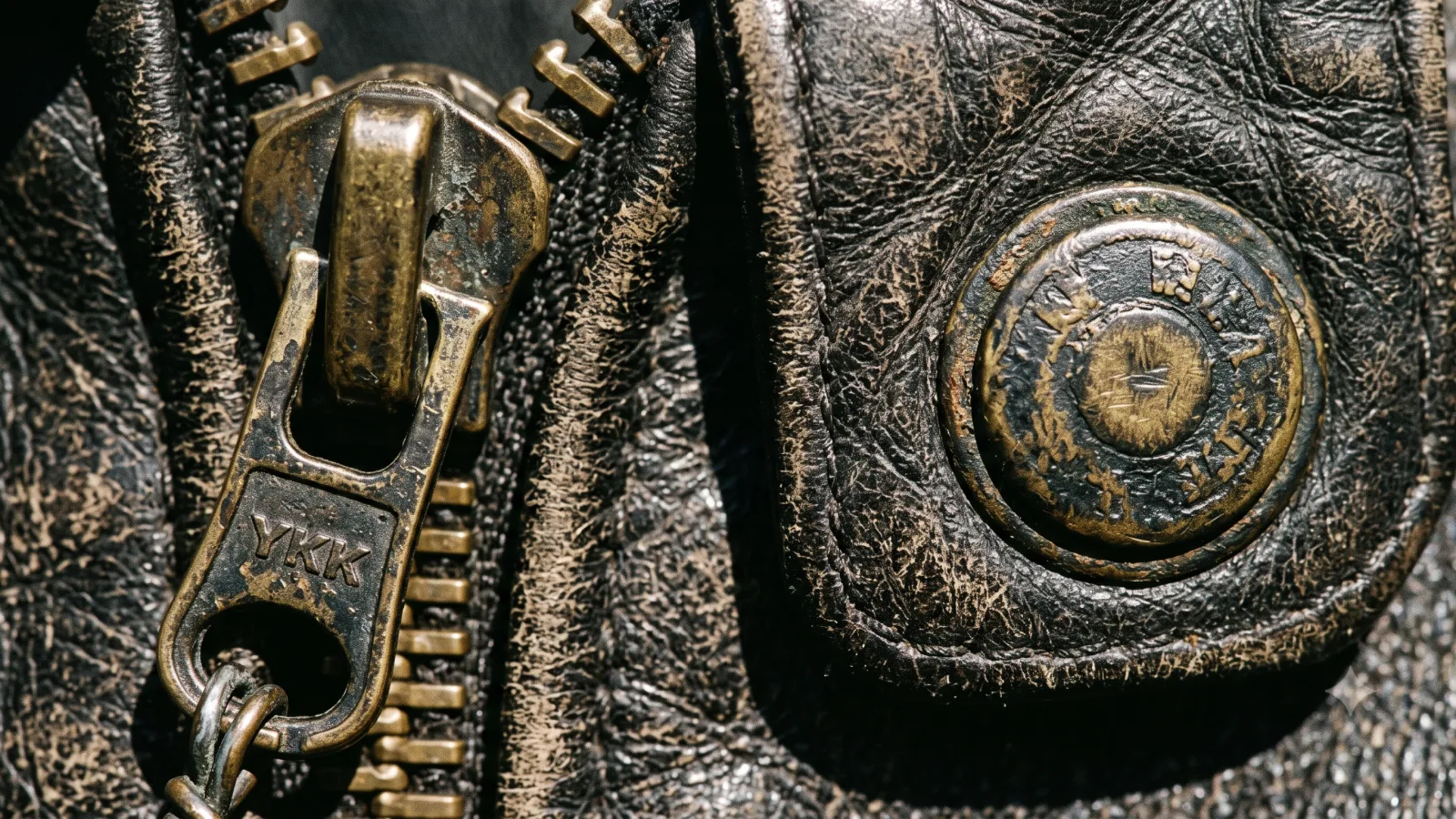
Zippers and snaps are stamped by their manufacturer, and those stamps are a reliable timeline:
- Talon zippers were dominant from the 1930s through the 1960s — a "Talon" stamped zipper pull is a strong (though not absolute, since zippers get replaced) indicator of pre-1960s manufacture.
- Conmar zippers overlap a similar era to Talon.
- YKK became the dominant global zipper maker from the 1970s onward — a YKK zipper on a jacket claiming 1950s origin usually means the zipper was replaced at some point (common and not disqualifying, but it should be reflected in the price and disclosed by the seller).
- Snap stamps — makers like Schott used branded snaps (stamped "SCOVILL" or the maker's own name). Generic unstamped snaps on a jacket claiming a name-brand pedigree is a flag worth asking the seller about directly.
Cross-reference
When a listing's label era and hardware era don't match, ask the seller directly before buying — a legitimate seller who's done their research will have an answer (replaced zipper, re-lined jacket) rather than getting defensive.
See reference listings on eBay →The fastest red flags, in order of severity
- No label at all, or a label that's clearly been re-sewn in (uneven stitching around the label itself, different thread color than the rest of the garment).
- A "vintage" claim with modern branding (current-era logo, current tag format) — this is a current-production or recent jacket, not vintage, regardless of what the listing title says.
- Uniform, machine-perfect distressing only on the outside of the jacket, with a pristine, unworn-looking interior lining — this pattern is typical of manufactured "vintage wash" treatments, not decades of real wear.
- A seller who can't answer basic construction questions (hide type, lining material, zipper brand) about a jacket they're pricing at a premium for its authenticity.