How to Store Vintage Clothing So It Actually Lasts
Most damage to stored vintage pieces happens slowly, from bad storage conditions — not from wear.
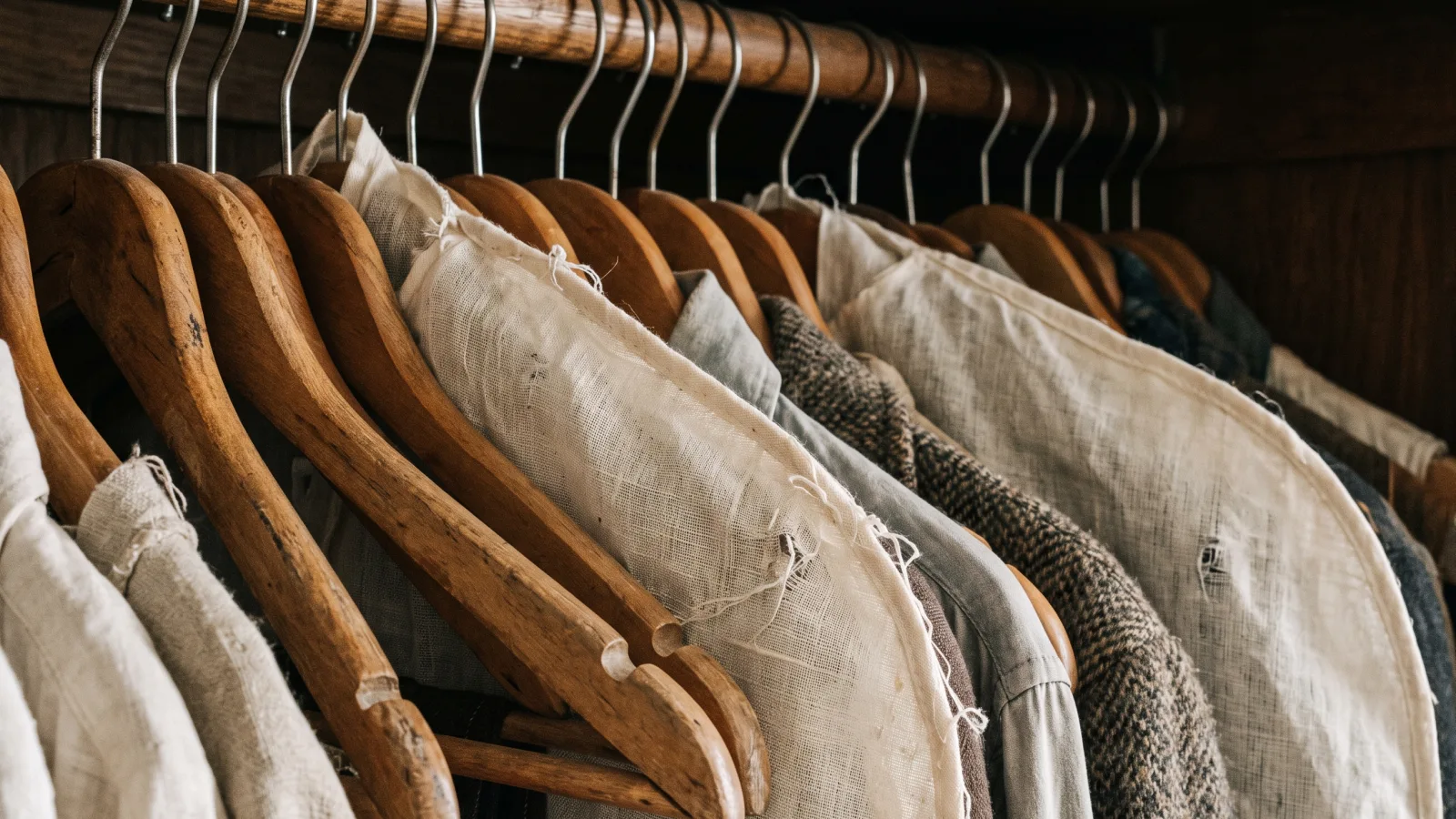
The three things that actually destroy stored clothing
- Light, especially direct sunlight. UV exposure fades dye and weakens fibers over time, even through a window — this is why display and long-term storage are different things.
- Humidity and trapped moisture. The number one cause of mold, mildew, and the musty smell associated with poorly stored vintage — far more damaging long-term than dust.
- Poor hanging or folding technique. Wire hangers, overcrowded closets, and folding heavy pieces incorrectly cause permanent stretching, creasing, and shoulder damage over months and years.
Hang vs. fold — the actual rule
Structured pieces (blazers, coats, leather jackets, tailored anything) should be hung on a wide, padded or contoured hanger that matches the shoulder shape — never wire. Knits and heavy sweaters should always be folded, never hung, since hanging stretches knit fabric permanently at the shoulders over time. When folding knits, fold loosely and refold every few months to avoid permanent crease lines forming along the fold.
Storage by material
- Leather. Hang on a wide hanger with the jacket's weight evenly distributed, in a breathable cotton garment bag — never sealed plastic, which traps moisture. Keep away from direct heat sources and out of direct sunlight. See our full leather care guide for conditioning schedule.
- Wool. Fold and store with cedar blocks or lavender sachets rather than mothballs (which leave a persistent chemical smell) to deter moths, which specifically target wool fibers.
- Silk. Store flat or loosely folded in acid-free tissue, away from light. Silk is particularly vulnerable to yellowing from both light exposure and prolonged contact with regular (non-acid-free) tissue or cardboard.
- Cotton and denim. The most forgiving materials for storage — hang or fold based on structure, with no special humidity concerns beyond general good practice.
Acid-free tissue paper prevents yellowing on silk and delicate light-colored pieces stored for any real length of time — a small investment for pieces worth protecting.
See current options →Climate matters more than most people account for
A closet against an exterior wall, an attic, or a basement often runs at meaningfully different humidity and temperature than the rest of the house — exactly the conditions that accelerate mold and fiber breakdown. If you're storing anything valuable long-term, a small silica gel packet or two in the storage area, and a spot-check every few months for must smell or visible spotting, catches problems while they're still easily reversible.
Before you put something away for the season
Always clean before storing, never after — stains and body oils left in fabric during storage set permanently and also attract pests. This applies across every material: wash or dry-clean as appropriate (see our cleaning guide for fabric-specific steps), let it fully dry, then store. A single overlooked stain is the most common reason a stored piece comes out of storage in worse shape than it went in.